
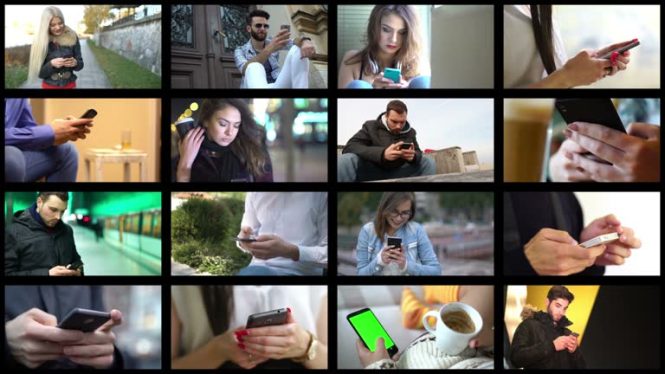
There may be no object in modern history that has altered human behavior more quietly and more completely than the smartphone. It rests in our hands with the weight of a small notebook, yet it carries more computing power than the machines that once guided spacecraft. It connects us instantly to nearly any person on earth. It stores our memories, manages our finances, tracks our movement, answers our questions, and fills our silence. It is a triumph of engineering and a transformation of daily life. It is also a source of subtle and profound disruption.
The smartphone did not arrive as a cultural experiment. It arrived as a tool of efficiency. Communication became immediate. Navigation became effortless. Photography became constant. Information became portable. Entire industries reorganized themselves around its presence. Banking, transportation, retail, media, and education reshaped their delivery systems to meet people where they were now looking. The device did not simply support society. It began to define its pace.
There is undeniable good in this. Access to knowledge has expanded dramatically. A teenager in a rural town can learn programming from world class instructors. A small business owner can reach global customers. Emergency services can be contacted instantly. Families separated by distance can maintain daily contact through video and messaging. In many parts of the world, mobile technology has leapfrogged traditional infrastructure and enabled participation in financial systems that were previously inaccessible. It would be dishonest to ignore the empowerment embedded in this small object.
Yet empowerment without reflection can become dependency. What makes the smartphone powerful is not only its hardware but the ecosystem built around it. Notifications are engineered to demand attention. Applications are designed to retain engagement. Algorithms learn preferences and adjust content streams to maximize time on screen. The device is not neutral. It competes for cognitive real estate. It fragments attention into smaller intervals and trains the mind to expect stimulation on demand.
The cost of this fragmentation is subtle. Conversations are interrupted by glances downward. Meals are shared alongside scrolling. Silence becomes uncomfortable because it is easily filled. Waiting in line becomes an opportunity to consume rather than to observe. Attention shifts from the environment to the interface. Over time, the threshold for boredom decreases. The capacity for sustained focus weakens. We carry infinite information, yet struggle to remain present for five uninterrupted minutes.
The smartphone has also reshaped social architecture. Friendship now exists in parallel with digital presence. Validation arrives through metrics rather than eye contact. Social comparison intensifies as curated lives are displayed continuously. The device offers connection at scale but often at the expense of depth. It allows constant contact but can diminish genuine engagement. Being reachable at all times subtly alters expectations in work and personal life. The boundary between professional and private dissolves.
This does not mean society is collapsing. It means society is adapting faster than it understands. We often underestimate the influence of tools because they integrate gradually. The smartphone did not demand surrender. It offered convenience. It offered efficiency. It offered entertainment. Each small benefit seemed rational. The cumulative effect was transformative.
There is also a dimension of power that few people fully consider. The smartphone is a data collection instrument. It tracks location, behavior patterns, purchasing habits, communication networks, and search history. This data fuels entire economic models. It shapes advertising, influences political messaging, and guides product development. Most users experience the front end of the device but rarely contemplate the invisible infrastructure behind it. They interact with the screen without recognizing the scale of systems analyzing that interaction.
At the same time, the device has become indispensable. Try leaving it at home for a day. Navigation becomes uncertain. App based services become inaccessible. Communication slows. Identity verification systems fail. The modern world increasingly assumes that the individual carries this device. It is not simply a phone. It is a credential, a wallet, a map, and a gateway. With such centralization comes vulnerability. Loss of access can feel destabilizing because so many functions now converge in one object.
There is irony in this convergence. The same device that connects families across continents can isolate individuals sitting side by side. The same technology that democratizes information can amplify misinformation. The same platform that gives voice to millions can reduce discourse to outrage. The smartphone magnifies human behavior. It does not create impulses from nothing, but it accelerates them and distributes them widely.
Understanding this duality requires maturity rather than panic. The smartphone is neither savior nor villain. It is a tool embedded within economic incentives and human psychology. Its influence depends on how consciously it is used. When it supplements life, it enhances it. When it replaces life, it distorts it.
The deeper concern may not be the device itself but the absence of deliberate boundaries. Few of us were taught how to integrate this technology responsibly. It entered homes before social norms were fully developed. Children grow up with constant access to stimulation. Adults struggle to disconnect from work that now lives in their pockets. The device becomes default rather than intentional.
There is opportunity here. The same power that fragments attention can be redirected toward education, entrepreneurship, and creative expression. The same connectivity that dilutes conversation can also maintain relationships that distance would otherwise erode. The difference lies in awareness. Power without awareness becomes control. Power with awareness becomes leverage.
Perhaps the question is not whether smartphones are ruining society, but whether society is mature enough to wield them wisely. Tools amplify capacity. They also amplify weakness. The device in our hands reflects our habits back to us. It exposes our need for validation, our appetite for distraction, and our vulnerability to manipulation. It also enables learning, connection, and innovation at unprecedented scale.
We stand at an inflection point not because of the technology, but because of our relationship to it. Mastery requires intention. Resilience requires boundaries. Presence requires discipline. The smartphone will continue to evolve. The more pressing question is whether our judgment evolves alongside it.
The device in our hands is powerful. The outcome depends on the one holding it.