
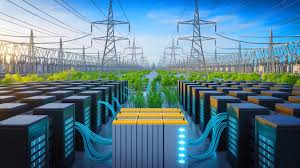
Data centers are the quiet engines of the modern world. They do not occupy headlines in the way artificial intelligence or consumer technology does, yet they enable nearly everything those innovations promise. Every search query, financial transaction, streamed video, medical record, navigation request, and industrial automation signal depends on physical infrastructure somewhere processing, storing, and transmitting information. The cloud is not abstract. It is concrete, steel, silicon, and electricity.
The benefits of data centers are substantial and measurable. They enable global communication at scale. They support financial systems that operate continuously. They power medical research, climate modeling, logistics coordination, and education platforms that reach millions. They allow small businesses to access computing capacity that once required enormous capital investment. They form the backbone of artificial intelligence systems that are reshaping productivity across industries. In many ways, data centers are a force multiplier for human capability.
Economically, they bring investment, high value employment, and technological leadership. Regions that host major facilities often see secondary growth in fiber infrastructure, advanced cooling technologies, renewable energy development, and engineering talent. For countries seeking to remain competitive in a digital economy, data center capacity is not optional. It is strategic.
Yet every data center operates on a fundamental requirement that is far less abstract than the services it supports. It requires power. Large scale facilities consume electricity at levels comparable to small cities. As demand for artificial intelligence accelerates, computing intensity increases. Training and operating large models requires enormous processing capacity. That capacity translates directly into energy consumption.
The conversation often emphasizes innovation and economic growth. Less frequently does it examine the cumulative load these facilities place on regional power grids. Electricity generation is not infinite. It must be produced in real time to meet demand. Grids are engineered around forecasted consumption patterns that historically included residential, industrial, and commercial usage. Now a new category of persistent high density demand is expanding rapidly.
This raises strategic questions rather than emotional ones. What happens during peak demand periods when generation capacity is strained? In extreme weather events, when heating or cooling becomes essential for public safety, electricity demand surges. If large data centers require uninterrupted power to prevent service disruption, how are priorities managed? Technology companies design systems for redundancy, but redundancy does not eliminate grid dependence. It shifts and redistributes it.
Backup generators can sustain facilities temporarily, yet they are not a long term substitute for stable grid supply. In regions where generation margins are already narrow, the addition of energy intensive data infrastructure requires careful planning. Without expansion in production capacity, strain becomes more likely. Blackouts are not theoretical. They occur when demand exceeds supply or when transmission systems fail under load.
The deeper issue is not simply consumption. It is concentration. As more economic activity, public services, and communication platforms rely on centralized data infrastructure, dependency increases. If outages occur, consequences ripple quickly. Banking services slow. Supply chains hesitate. Communication networks degrade. The more integrated society becomes with digital systems, the more essential uninterrupted power becomes for daily life.
This does not mean data centers are harmful. It means they must be integrated into energy planning with foresight. The future grid cannot resemble the past grid. Generation expansion, transmission reinforcement, and energy storage must evolve alongside digital growth. Renewable integration, small modular reactors, grid scale batteries, and decentralized generation may all play a role. The key is synchronization. Digital ambition must align with physical capability.
There is also an ethical dimension. Access to electricity is foundational to modern living. Heating, cooling, refrigeration, water treatment, and medical services depend on reliable supply. If energy allocation increasingly favors commercial data operations during scarcity, public trust erodes. Policymakers must anticipate these tensions rather than react to them during crisis.
We are at a moment where enthusiasm for artificial intelligence and digital expansion is understandable. Productivity gains are real. Economic incentives are strong. However, infrastructure decisions compound over decades. Power plants, transmission corridors, and cooling systems are not temporary investments. They shape regional resilience for generations.
The responsible question is not whether to build data centers. It is how to build them in alignment with long term energy strategy. Are we expanding generation capacity in proportion to projected computing demand? Are we designing grids for resilience under climate stress and technological dependency? Are we transparent about tradeoffs between digital growth and physical constraints?
Progress requires ambition. It also requires prudence. The cloud feels weightless, but it rests on physical systems that obey the laws of thermodynamics. Electricity must be generated before it is consumed. Capacity must exist before it is demanded.
The future will depend increasingly on digital infrastructure. That dependence makes energy policy inseparable from technology policy. If we plan only for present demand, we create vulnerability for future generations. If we plan for integrated growth, we build resilience alongside innovation.
Data centers can elevate society. They can accelerate discovery and economic strength. But they cannot float above the grid that powers them. The question before us is not whether we embrace digital expansion. It is whether we are prepared to power it responsibly.